
사전 정의된 에이전트 전략
에이전트 구현을 보다 쉽게 만들기 위해, Koog는 일반적인 에이전트 사용 사례에 적합한 사전 정의된 에이전트 전략을 제공합니다. 현재 다음과 같은 사전 정의된 전략을 사용할 수 있습니다.
채팅 에이전트 전략
채팅 에이전트 전략은 채팅 상호작용 프로세스를 실행하도록 설계되었습니다. 이 전략은 사용자 입력을 처리하고, 도구를 실행하며, 채팅 방식의 응답을 제공하기 위해 서로 다른 단계, 노드 및 도구 간의 상호작용을 조정합니다.
개요
채팅 에이전트 전략은 에이전트가 다음과 같은 패턴을 따르도록 구현합니다:
- 사용자 입력을 받습니다.
- LLM을 사용하여 입력을 프로세싱합니다.
- 도구를 호출하거나 직접 응답을 제공합니다.
- 도구 실행 결과를 처리하고 대화를 이어갑니다.
- LLM이 도구를 사용하는 대신 일반 텍스트로 응답하려고 시도할 경우 피드백을 제공합니다.
이러한 접근 방식은 에이전트가 사용자의 요청을 충족하기 위해 도구를 사용할 수 있는 대화형 인터페이스를 생성합니다.
설정 및 의존성
Koog에서 채팅 에이전트 전략은 chatAgentStrategy 함수를 통해 구현됩니다. 에이전트 코드에서 이 함수를 사용하려면 다음 의존성을 추가하세요:
ai.koog.agents.ext.agent.chatAgentStrategy이 전략을 사용하려면 아래 패턴에 따라 AI 에이전트를 생성하세요:
=== "Kotlin"
<!--- INCLUDE
import ai.koog.agents.core.agent.AIAgent
import ai.koog.prompt.executor.llms.all.simpleOpenAIExecutor
import ai.koog.agents.ext.agent.chatAgentStrategy
import ai.koog.agents.core.tools.ToolRegistry
import ai.koog.prompt.executor.clients.openai.OpenAIModels

val apiKey = System.getenv("OPENAI_API_KEY") ?: error("Please set OPENAI_API_KEY environment variable")
val promptExecutor =simpleOpenAIExecutor(apiKey)
val toolRegistry = ToolRegistry.EMPTY
val model =  OpenAIModels.Chat.O4Mini
-->
```kotlin
val chatAgent = AIAgent(
    promptExecutor = promptExecutor,
    toolRegistry = toolRegistry,
    llmModel = model,
    // chatAgentStrategy를 에이전트 전략으로 설정
    strategy = chatAgentStrategy()
)
```
<!--- KNIT example-predefined-strategies-01.kt -->
=== "Java"
<!--- INCLUDE
import ai.koog.agents.core.agent.AIAgent;
import ai.koog.agents.core.tools.ToolRegistry;
import ai.koog.prompt.executor.clients.openai.OpenAIModels;
import ai.koog.prompt.executor.model.PromptExecutor;
import ai.koog.agents.ext.agent.AIAgentStrategies;
class examplePredefinedStrategiesJava01 {
    public static void main(String[] args) {
-->
<!--- SUFFIX
    }
}
-->
```java
AIAgent<String, String> chatAgent = AIAgent.builder()
    .promptExecutor(PromptExecutor.builder().openAI("OPENAI_API_KEY").build())
    .llmModel(OpenAIModels.Chat.O4Mini)
    .toolRegistry(ToolRegistry.builder().build())
    // chatAgentStrategy를 에이전트 전략으로 설정
    .graphStrategy(AIAgentStrategies.chatAgentStrategy())
    .build();
```
<!--- KNIT examplePredefinedStrategiesJava01.java -->
채팅 에이전트 전략을 사용하는 경우
채팅 에이전트 전략은 특히 다음과 같은 경우에 유용합니다:
- 도구를 사용해야 하는 대화형 에이전트 구축
- 사용자 요청에 따라 작업을 수행할 수 있는 어시스턴트 제작
- 외부 시스템이나 데이터에 액세스해야 하는 챗봇 구현
- 일반 텍스트 응답보다 도구 사용을 강제하고 싶은 시나리오
예제
다음은 사전 정의된 채팅 에이전트 전략(chatAgentStrategy)과 에이전트가 사용할 수 있는 도구를 구현한 AI 에이전트의 코드 샘플입니다:
=== "Kotlin"
<!--- INCLUDE
import ai.koog.agents.core.agent.AIAgent
import ai.koog.prompt.executor.llms.all.simpleOpenAIExecutor
import ai.koog.agents.ext.agent.chatAgentStrategy
import ai.koog.agents.core.tools.ToolRegistry
import ai.koog.prompt.executor.clients.openai.OpenAIModels
import ai.koog.agents.ext.tool.AskUser
import ai.koog.agents.ext.tool.SayToUser

typealias searchTool = AskUser
typealias weatherTool = SayToUser

val apiKey = System.getenv("OPENAI_API_KEY") ?: error("Please set OPENAI_API_KEY environment variable")
val promptExecutor =simpleOpenAIExecutor(apiKey)
val toolRegistry = ToolRegistry.EMPTY
val model =  OpenAIModels.Chat.O4Mini
-->
```kotlin
val chatAgent = AIAgent(
    promptExecutor = promptExecutor,
    llmModel = model,
    // chatAgentStrategy를 에이전트 전략으로 사용
    strategy = chatAgentStrategy(),
    // 에이전트가 사용할 수 있는 도구 추가
    toolRegistry = ToolRegistry {
        tool(searchTool)
        tool(weatherTool)
    }
)

suspend fun main() {
    // 사용자 쿼리로 에이전트 실행
    val result = chatAgent.run("오늘 날씨는 어때? 우산을 챙겨야 할까?")
}
```
<!--- KNIT example-predefined-strategies-02.kt -->
=== "Java"
<!--- INCLUDE
import ai.koog.agents.core.agent.AIAgent;
import ai.koog.agents.core.tools.ToolRegistry;
import ai.koog.agents.core.tools.reflect.ToolSet;
import ai.koog.agents.core.tools.annotations.Tool;
import ai.koog.agents.core.tools.annotations.LLMDescription;
import ai.koog.prompt.executor.clients.openai.OpenAIModels;
import ai.koog.prompt.executor.model.PromptExecutor;
import ai.koog.agents.ext.agent.AIAgentStrategies;
class examplePredefinedStrategiesJava02 {
    static class SearchAndWeatherTools implements ToolSet {
        @Tool
        @LLMDescription("정보 검색")
        public String search(@LLMDescription("검색 쿼리") String query) {
            return "검색 결과: " + query;
        }
        @Tool
        @LLMDescription("날씨 정보 조회")
        public String weather(@LLMDescription("위치") String location) {
            return location + "의 날씨: 맑음";
        }
    }
    public static void main(String[] args) {
-->
<!--- SUFFIX
    }
}
-->
```java
// 에이전트가 사용할 수 있는 도구 추가
ToolRegistry toolRegistry = ToolRegistry.builder()
    .tools(new SearchAndWeatherTools())
    .build();

AIAgent<String, String> chatAgent = AIAgent.builder()
    .promptExecutor(PromptExecutor.builder().openAI("OPENAI_API_KEY").build())
    .llmModel(OpenAIModels.Chat.O4Mini)
    // chatAgentStrategy를 에이전트 전략으로 사용
    .graphStrategy(AIAgentStrategies.chatAgentStrategy())
    .toolRegistry(toolRegistry)
    .build();

// 사용자 쿼리로 에이전트 실행
String result = chatAgent.run("오늘 날씨는 어때? 우산을 챙겨야 할까?");
```
<!--- KNIT examplePredefinedStrategiesJava02.java -->
ReAct 전략
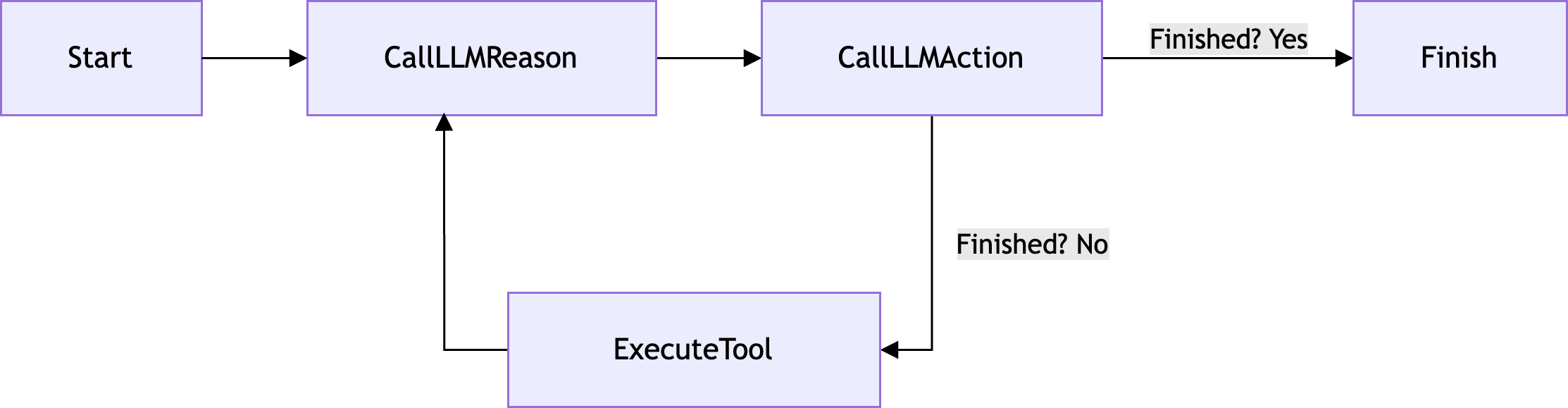
ReAct(Reasoning and Acting, 추론 및 실행) 전략은 태스크를 동적으로 처리하고 대규모 언어 모델(LLM)에 출력을 요청하기 위해 추론 단계와 실행 단계를 번갈아 수행하는 AI 에이전트 전략입니다.
개요
ReAct 전략은 에이전트가 다음과 같은 패턴을 따르도록 구현합니다:
- 현재 상태에 대해 추론하고 다음 단계를 계획합니다.
- 해당 추론을 바탕으로 액션을 수행합니다.
- 액션의 결과를 관찰합니다.
- 이 사이클을 반복합니다.
이 접근 방식은 추론(문제를 단계별로 생각하기)과 실행(정보를 수집하거나 작업을 수행하기 위해 도구 실행)의 장점을 결합한 것입니다.
흐름도
ReAct 전략의 흐름도는 다음과 같습니다:
설정 및 의존성
Koog에서 ReAct 전략은 reActStrategy 함수를 통해 구현됩니다.
이 전략을 사용하려면 아래 패턴에 따라 AI 에이전트를 생성하세요:
=== "Kotlin"
<!--- INCLUDE
import ai.koog.agents.core.agent.AIAgent
import ai.koog.prompt.executor.llms.all.simpleOpenAIExecutor
import ai.koog.agents.ext.agent.reActStrategy
import ai.koog.agents.core.tools.ToolRegistry
import ai.koog.prompt.executor.clients.openai.OpenAIModels

val apiKey = System.getenv("OPENAI_API_KEY") ?: error("Please set OPENAI_API_KEY environment variable")
val promptExecutor = simpleOpenAIExecutor(apiKey)
val toolRegistry = ToolRegistry.EMPTY
val model =  OpenAIModels.Chat.O4Mini
-->
```kotlin {5-10}
val reActAgent = AIAgent(
    promptExecutor = promptExecutor,
    toolRegistry = toolRegistry,
    llmModel = model,
    // reActStrategy를 에이전트 전략으로 설정
    strategy = reActStrategy(
        // 선택적 파라미터 값 설정
        reasoningInterval = 1,
        name = "react_agent"
    )
)
```
<!--- KNIT example-predefined-strategies-03.kt -->
=== "Java"
<!--- INCLUDE
import ai.koog.agents.core.agent.AIAgent;
import ai.koog.agents.core.tools.ToolRegistry;
import ai.koog.prompt.executor.clients.openai.OpenAIModels;
import ai.koog.prompt.executor.model.PromptExecutor;
import ai.koog.agents.ext.agent.AIAgentStrategies;
class examplePredefinedStrategiesJava03 {
    public static void main(String[] args) {
-->
<!--- SUFFIX
    }
}
-->
```java
AIAgent<String, String> reActAgent = AIAgent.builder()
    .promptExecutor(PromptExecutor.builder().openAI("OPENAI_API_KEY").build())
    .llmModel(OpenAIModels.Chat.O4Mini)
    .toolRegistry(ToolRegistry.builder().build())
    // reActStrategy를 에이전트 전략으로 설정
    .graphStrategy(AIAgentStrategies.reActStrategy(
        // 선택적 파라미터 값 설정
        1, // reasoningInterval
        "react_agent" // name
    ))
    .build();
```
파라미터
reActStrategy 함수는 다음과 같은 파라미터를 가집니다:
| 파라미터 | 타입 | 기본값 | 설명 |
|---|---|---|---|
reasoningInterval | Int | 1 | 추론 단계의 간격을 지정합니다. 0보다 커야 합니다. |
name | String | re_act | 전략의 이름입니다. |
사용 사례 예시
간단한 뱅킹 에이전트와 함께 ReAct 전략이 어떻게 작동하는지에 대한 예시입니다:
1. 사용자 입력
사용자가 초기 프롬프트를 보냅니다. 예를 들어, 지난달에 내가 얼마나 썼어?와 같은 질문일 수 있습니다.
2. 추론 (Reasoning)
에이전트는 사용자 입력과 추론 프롬프트를 바탕으로 초기 추론을 수행합니다. 추론 내용은 다음과 같을 수 있습니다:
다음 단계를 따라야 합니다:
1. 지난달의 모든 거래 내역을 가져옵니다.
2. 입금 내역(양수 금액)을 제외합니다.
3. 총 지출액을 계산합니다.
3. 액션 및 실행 (Action and execution), 1단계
에이전트가 이전 단계에서 정의한 작업 항목을 바탕으로, 지난달의 모든 거래 내역을 가져오는 도구를 실행합니다.
이 경우 실행할 도구는 get_transactions이며, 지난달의 모든 거래를 가져오라는 요청과 일치하는 startDate 및 endDate 인자를 함께 전달합니다:
{tool: "get_transactions", args: {startDate: "2025-05-19", endDate: "2025-06-18"}}도구는 다음과 같은 결과를 반환할 수 있습니다:
[
  {date: "2025-05-25", amount: -100.00, description: "Grocery Store"},
  {date: "2025-05-31", amount: +1000.00, description: "Salary Deposit"},
  {date: "2025-06-10", amount: -500.00, description: "Rent Payment"},
  {date: "2025-06-13", amount: -200.00, description: "Utilities"}
]
4. 추론 (Reasoning)
도구에서 반환된 결과를 가지고, 에이전트는 흐름의 다음 단계를 결정하기 위해 다시 추론을 수행합니다:
거래 내역을 확인했습니다. 이제 다음 작업이 필요합니다:
1. +1000.00의 급여 입금 내역을 제거합니다.
2. 남은 거래 내역을 합산합니다.
5. 액션 및 실행 (Action and execution), 2단계
이전 추론 단계를 바탕으로, 에이전트는 도구 인자로 제공된 금액들을 합산하는 calculate_sum 도구를 호출합니다. 추론 결과 거래 내역에서 양수 금액을 제거하기로 했으므로, 도구 인자로 제공되는 금액은 음수 금액들뿐입니다:
{tool: "calculate_sum", args: {amounts: [-100.00, -500.00, -200.00]}}도구가 최종 결과를 반환합니다:
-800.006. 최종 응답
에이전트는 계산된 합계가 포함된 최종 응답(어시스턴트 메시지)을 반환합니다:
지난달에 식료품, 월세, 공과금으로 총 $800.00를 지출하셨습니다.ReAct 전략을 사용하는 경우
ReAct 전략은 특히 다음과 같은 경우에 유용합니다:
- 다단계 추론이 필요한 복잡한 태스크
- 에이전트가 최종 답변을 제공하기 전에 정보를 수집해야 하는 시나리오
- 문제를 더 작은 단계로 나누었을 때 도움이 되는 문제들
- 분석적 사고와 도구 사용이 모두 필요한 태스크
예제
다음은 사전 정의된 ReAct 전략(reActStrategy)과 에이전트가 사용할 수 있는 도구를 구현한 AI 에이전트의 코드 샘플입니다:
=== "Kotlin"
<!--- INCLUDE
import ai.koog.agents.core.agent.AIAgent
import ai.koog.prompt.executor.llms.all.simpleOpenAIExecutor
import ai.koog.agents.ext.agent.reActStrategy
import ai.koog.agents.core.tools.ToolRegistry
import ai.koog.prompt.executor.clients.openai.OpenAIModels
import ai.koog.agents.ext.tool.AskUser
import ai.koog.agents.ext.tool.SayToUser

typealias Input = String

typealias getTransactions = AskUser
typealias calculateSum = SayToUser

val apiKey = System.getenv("OPENAI_API_KEY") ?: error("Please set OPENAI_API_KEY environment variable")
val promptExecutor = simpleOpenAIExecutor(apiKey)
val toolRegistry = ToolRegistry.EMPTY
val model =  OpenAIModels.Chat.O4Mini
-->
```kotlin
val bankingAgent = AIAgent(
    promptExecutor = promptExecutor,
    llmModel = model,
    // reActStrategy를 에이전트 전략으로 사용
    strategy = reActStrategy(
        reasoningInterval = 1,
        name = "banking_agent"
    ),
    // 에이전트가 사용할 수 있는 도구 추가
    toolRegistry = ToolRegistry {
        tool(getTransactions)
        tool(calculateSum)
    }
)

suspend fun main() {
    // 사용자 쿼리로 에이전트 실행
    val result = bankingAgent.run("지난달에 내가 얼마나 썼어?")
}
```
<!--- KNIT example-predefined-strategies-04.kt -->
=== "Java"
<!--- INCLUDE
import ai.koog.agents.core.agent.AIAgent;
import ai.koog.agents.core.tools.ToolRegistry;
import ai.koog.agents.core.tools.reflect.ToolSet;
import ai.koog.agents.core.tools.annotations.Tool;
import ai.koog.agents.core.tools.annotations.LLMDescription;
import ai.koog.prompt.executor.clients.openai.OpenAIModels;
import ai.koog.prompt.executor.model.PromptExecutor;
import ai.koog.agents.ext.agent.AIAgentStrategies;
class examplePredefinedStrategiesJava04 {
    static class BankingTools implements ToolSet {
        @Tool
        @LLMDescription("날짜 범위에 대한 거래 내역 조회")
        public String getTransactions(
            @LLMDescription("시작 날짜") String startDate,
            @LLMDescription("종료 날짜") String endDate
        ) {
            return "[{amount: -100.00}, {amount: +1000.00}, {amount: -500.00}]";
        }
        @Tool
        @LLMDescription("금액 합계 계산")
        public String calculateSum(@LLMDescription("합산할 금액들") String amounts) {
            return "-800.00";
        }
    }
    public static void main(String[] args) {
-->
<!--- SUFFIX
    }
}
-->
```java
// 에이전트가 사용할 수 있는 도구 추가
ToolRegistry toolRegistry = ToolRegistry.builder()
    .tools(new BankingTools())
    .build();

AIAgent<String, String> bankingAgent = AIAgent.<String, String>builder()
    .promptExecutor(PromptExecutor.builder().openAI("OPENAI_API_KEY").build())
    .llmModel(OpenAIModels.Chat.O4Mini)
    // reActStrategy를 에이전트 전략으로 사용
    .graphStrategy(AIAgentStrategies.reActStrategy(1, "banking_agent"))
    .toolRegistry(toolRegistry)
    .build();

// 사용자 쿼리로 에이전트 실행
String result = bankingAgent.run("지난달에 내가 얼마나 썼어?");
```
<!--- KNIT examplePredefinedStrategiesJava03.java -->